
Become a Fashion Merchandiser. Master trend forecasting and retail math to AI-driven strategy.
From OTB plans and AI-powered forecasting to a portfolio that gets interviews, this is the insider blueprint that turns fashion ambition into a real merchandising career.
"The gap between talented and hired is fluency. That's exactly what this course give you."
— Jennifer Xue of StyleCareer.com
What you'll learn
What you'll be able to do
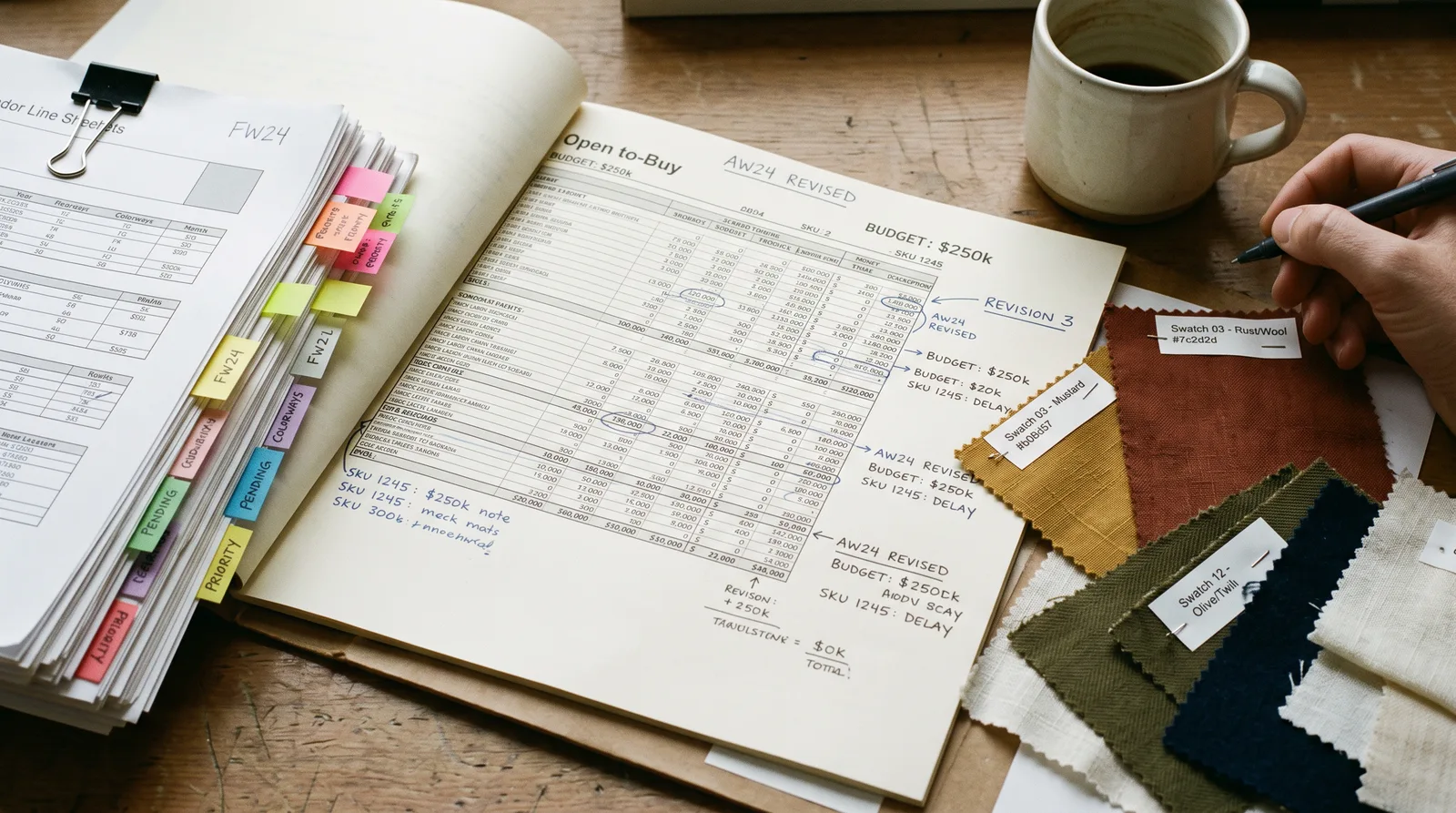
- Build a complete open-to-buy (OTB) plan and seasonal assortment strategy from scratch
- Use AI tools like WGSN, Heuritech, EDITED, and Trendalytics to forecast trends and optimize pricing
- Read and construct line sheets, purchase orders, and spec sheets like a working merchandiser
- Analyze consumer segments and competitive retail landscapes to inform smarter buying decisions
- Design a visual merchandising and omnichannel layout for both in-store and e-commerce channels
- Assemble a job-ready portfolio with case studies, a polished LinkedIn profile, and interview-ready answers
How it works
A school that adapts to you
This isn't a set of static videos. Every lesson is generated live and tuned to where you actually are.
We learn your level
A quick placement check tailors your starting point so you're never bored or lost.
Lessons adapt as you go
Each lesson is written for your pace and your goal, adjusting as your skills grow.
Your AI coach keeps you moving
Checkpoints, feedback, and gentle nudges turn progress into a real result.
The curriculum
What's inside your school
12 modules · 48 lessons
Myths & Realities of the Fashion Merchandiser Profession
Cuts through misconceptions to give students a clear-eyed picture of what fashion merchandisers actually do day to day.
- 1.1What a Fashion Merchandiser Actually Does (vs. What People Think)Included
- 1.2Myth-Busting: "It's Just Shopping for a Living" and Other MisconceptionsIncluded
- 1.3Merchandiser vs. Designer vs. Buyer vs. Stylist — Clarifying the ConfusionIncluded
- 1.4A Day in the Life: Real Merchandisers, Real WorkflowsIncluded
Foundations of Fashion Merchandising
Builds the core professional vocabulary, historical context, and structural knowledge every merchandiser needs.
- 2.1The History and Evolution of Merchandising as a DisciplineIncluded
- 2.2Core Responsibilities: Planning, Buying, Allocating, AnalyzingIncluded
- 2.3The Fashion Calendar: Seasons, Cycles, and Lead TimesIncluded
- 2.4Key Roles in the Merchandising Department (Assistant to Director)Included
Understanding the Fashion Retail Ecosystem & Consumer
Explores how fashion retail is structured and how consumer behavior drives every merchandising choice.
- 3.1How Fashion Retail Works: Wholesale, Retail, DTC, MarketplaceIncluded
- 3.2Consumer Segmentation and Buying BehaviorIncluded
- 3.3Reading the Market: Competitive Landscape AnalysisIncluded
- 3.4Case Study: How a Retail Giant Wins (or Loses) on MerchandisingIncluded
Trend Forecasting & Market Research (with AI Tools)
Teaches students to identify and translate emerging trends into concrete buying decisions using both traditional and AI-powered methods.
- 4.1Traditional Trend Forecasting MethodsIncluded
- 4.2AI-Powered Forecasting: Using Heuritech, WGSN & Social Listening ToolsIncluded
- 4.3Turning Trend Data Into Actionable BuysIncluded
- 4.4Practical Exercise: Build a Trend Report Using AI ToolsIncluded
Buying & Assortment Planning
Walks through the end-to-end buying process and teaches students to build balanced, profitable assortment plans.
- 5.1The Buying Process: From Line Sheets to Purchase OrdersIncluded
- 5.2Assortment Planning: Balancing Breadth, Depth, and Price PointsIncluded
- 5.3Vendor Negotiation FundamentalsIncluded
- 5.4Practical Exercise: Build a Mock Assortment PlanIncluded
Retail Math & Financial Planning
Develops the quantitative fluency merchandisers need to plan, forecast, and protect margin.
- 6.1Essential Retail Math: Markup, Margin, MarkdownIncluded
- 6.2Open-to-Buy (OTB) PlanningIncluded
- 6.3Sales Forecasting and BudgetingIncluded
- 6.4Practical Exercise: Build an OTB SpreadsheetIncluded
Product Development & Vendor Relations
Covers how merchandisers collaborate with design and production teams and manage vendor partnerships across a product's lifecycle.
- 7.1Working with Design and Production TeamsIncluded
- 7.2Line Sheets, Tech Packs, and Spec Sheets — What Merchandisers Need to KnowIncluded
- 7.3Vendor Sourcing and Relationship ManagementIncluded
- 7.4Managing Timelines Across Design, Production, and DeliveryIncluded
Visual Merchandising & Omnichannel Retail
Teaches how to present product compellingly across both physical and digital retail environments.
- 8.1Principles of Visual Merchandising (In-Store and Digital)Included
- 8.2Merchandising for E-Commerce: Product Pages, Filters, and DiscoveryIncluded
- 8.3Omnichannel Strategy: Aligning Online and Offline AssortmentsIncluded
- 8.4Practical Exercise: Plan a Seasonal Store/Site LayoutIncluded
Inventory Management & Allocation
Builds skills in managing stock levels, allocating product to the right locations, and handling end-of-season inventory.
- 9.1Inventory Planning FundamentalsIncluded
- 9.2Allocation Strategy: Getting the Right Product to the Right StoreIncluded
- 9.3Managing Markdowns and ClearanceIncluded
- 9.4AI Tools for Demand Forecasting and Stock OptimizationIncluded
AI & Technology Transforming Fashion Merchandising
Examines the full AI merchandising stack and equips students to use these tools critically and responsibly.
- 10.1The AI Merchandising Stack: EDITED, Trendalytics, and BeyondIncluded
- 10.2Using AI for Pricing Optimization and Competitive IntelligenceIncluded
- 10.3Predictive Analytics: Forecasting Demand with Machine LearningIncluded
- 10.4Ethical Considerations: Bias, Overreliance, and the Human Judgment GapIncluded
Building Your Portfolio & Personal Brand
Guides students in packaging their coursework and skills into a compelling professional presence that gets noticed by hiring managers.
- 11.1What a Merchandising Portfolio Should IncludeIncluded
- 11.2Building Case Studies from Coursework and ProjectsIncluded
- 11.3Optimizing Your LinkedIn and Resume for Merchandising RolesIncluded
- 11.4Practical Exercise: Assemble Your PortfolioIncluded
Breaking Into the Industry & Career Growth
Gives students a concrete action plan for landing their first merchandising role and mapping a long-term career trajectory.
- 12.1Entry Points: Internships, Assistant Roles, and Alternative PathsIncluded
- 12.2Acing the Merchandising Interview (Common Questions & Case Exercises)Included
- 12.3Networking and Finding Mentors in Fashion RetailIncluded
- 12.4Career Pathways: From Assistant Merchandiser to VP of MerchandisingIncluded
Who it's for
Is this you?

Fashion school grads
You studied design or fashion business but graduated without the merchandising fundamentals hiring managers actually test for — this school fills that gap before it costs you the role.

Retail floor veterans
You know product, you know customers, and now you want to move into a buying or merchandising seat — this gives you the business frameworks and vocabulary to make that jump credible.

Merchandising assistants
You're already in the room but learning in fragments — this school gives you the complete picture, from OTB planning to AI forecasting, so you can compete for the next level up.

Career changers from styling
Your eye for product and trend is real, but the business side of merchandising — retail math, assortment planning, vendor relations — is the missing piece this school hands you directly.

Data-curious professionals
You come from an analytical or tech background and want to apply those skills in fashion — the AI forecasting, pricing optimization, and demand planning modules are built for exactly how your mind works.

Mid-career pivots
You've managed teams, budgets, or supply chains in adjacent industries and want to bring that experience into fashion retail — this school gives you the industry-specific language and portfolio to make the case.
Questions
Frequently asked
Your teacher
A note from your teacher

Jennifer Xue of StyleCareer.com
If you're reading this, you probably already know you want to be in fashion merchandising, but you're not totally sure how to break in, move up, or prove you belong in the room. Maybe you've been told to "get experience first" without anyone telling you how. Maybe you're already in an assistant role and feel like you're picking up pieces without ever seeing the full picture. Maybe you studied fashion and realized the business side was barely touched in school. I've been that person in the room, the one who knows the difference between a great buy and a disastrous one, who's built OTB plans from scratch, negotiated with vendors, managed markdowns, and watched AI tools go from novelty to necessity on real buying floors. And what I noticed, over and over, is that the gap between talented people and hired people isn't passion. It's fluency. It's knowing what a line sheet is before someone hands you one. It's being able to defend a purchase order with data. It's understanding what "open-to-buy" actually means in practice, not just as a buzzword. This school is my answer to that gap. I built it to be the resource I wish had existed: direct, practical, vocabulary-first, and built around the real workflows of a working merchandiser. We don't ease you in with theory and save the good stuff for the end. We start with what the job actually is (and isn't), and then we get to work. Every section has a practical exercise because knowing the concept is table stakes; being able to do the thing is what gets you hired. We also go deep on the AI tools reshaping this industry right now, WGSN, Heuritech, EDITED, Trendalytics, because the merchandisers who can pair their judgment with these platforms are the ones companies are fighting to hire. But I also make sure you understand where AI stops and human expertise begins, because a machine won't save a bad buy, and the industry still needs people who can read a room. By the time you finish, you'll have retail math fluency, a completed portfolio, a LinkedIn profile that speaks directly to hiring managers, and interview answers that hold up under real pressure, including the case exercises that trip up so many candidates. I'll be straight with you: this school is work. But it's the right work, in the right order, with the right outcome. Let's get you in the room.
— Jennifer Xue of StyleCareer.com
Start your journey today
Get instant access — learn at your own pace with an AI coach in your corner.
$39/mo
Recurring billing · cancel anytime
Secure checkout · Instant access
- 12 modules, 48 lessons
- AI-adaptive lessons tuned to your level
- Quizzes & checkpoints to lock in progress
- Your own AI learning coach
- Learn on any device, at your pace
- Full access for as long as you're subscribed